fredag 11 september 2015

A Visit to Linne

You may recognize Carl von Linné from the 100kr note. If you're not Swedish, you probably learned about Linneaus in school. It's the same guy. Carl von Linné was a Swedish naturalist who lived in the 18th century. He is responsible for helping to classify living things and coming up with the binomial nominclature system of naming living things. So next time you see a Taraxacum officinale or a Canis lupis familiarias, you can thank Linné. This statue is in Humlegården. To be fair, I asked these kids to look silly. 


måndag 24 augusti 2015

What is science?

In our first couple grade 3 IPC Lab lessons we talked about what a scientists did. The students started by drawing pictures of themselves working as scientists. 


This one looks a little like me!
Nearly every student drew themselves mixing potions. Our idea of science is "mad" scientists working in labs making magical potions. What we forget is that science is about asking questions and finding out new things. The word science comes from a Latin word sciere which means to know. The German and Swedish words for science (Wissenschaft and vetenskap) include the word for knowing. In other languages the word for science is related to the word for learning. I look forward to asking questions and finding out new things in IPC Lab this year. 

torsdag 23 april 2015

For the Birds

In grade 3 we are learning about birds and their adaptations. We played a game in one lesson where we had different tools that simulated beak shapes. Students had to gather food. They found that some beaks were well suited to different foods. Some of their poor birds starved. 

This beak worked well for "nectar". 
This didn't work for nectar. 

Filter feeder
Worm eater
"I can't get any nectar with this beak!"
Nectar beak comparison. 

We did some bird watching in the park to learn about some local birds. You can go to www.fågelsång.se to listen to local birds. 

 We also did an exercise about camouflage where different colors of fabric simulated animal coloring and habitat. Can you spot the fabric scraps that are camouflaged?


onsdag 22 april 2015

Electromagnets

Students in grade 6 made electromagnets. They chose a variable such as voltage, number of wraps or wire type. They measured how many nails they could pick up. They really showed progress in their investigation planning and analyzing skills. 


This was a super electromagnet with 600 wraps. We will use this one later this week to make an electromagnetic bell. Next week we will try to make a speaker. 


måndag 23 mars 2015

Thermometers and Compasses

Two simple tools that we take for granted. Grade 3 has been learning about significant people. Last week we talked about Fahrenheit and Celsius plus Carl von Linne's contribution to how we measure temperature. We made glass bottle thermometers. As the water in the bottle warms up it expands and moves up the straw. The was a great exercise in patience for these kids who are so used to immediate results. 


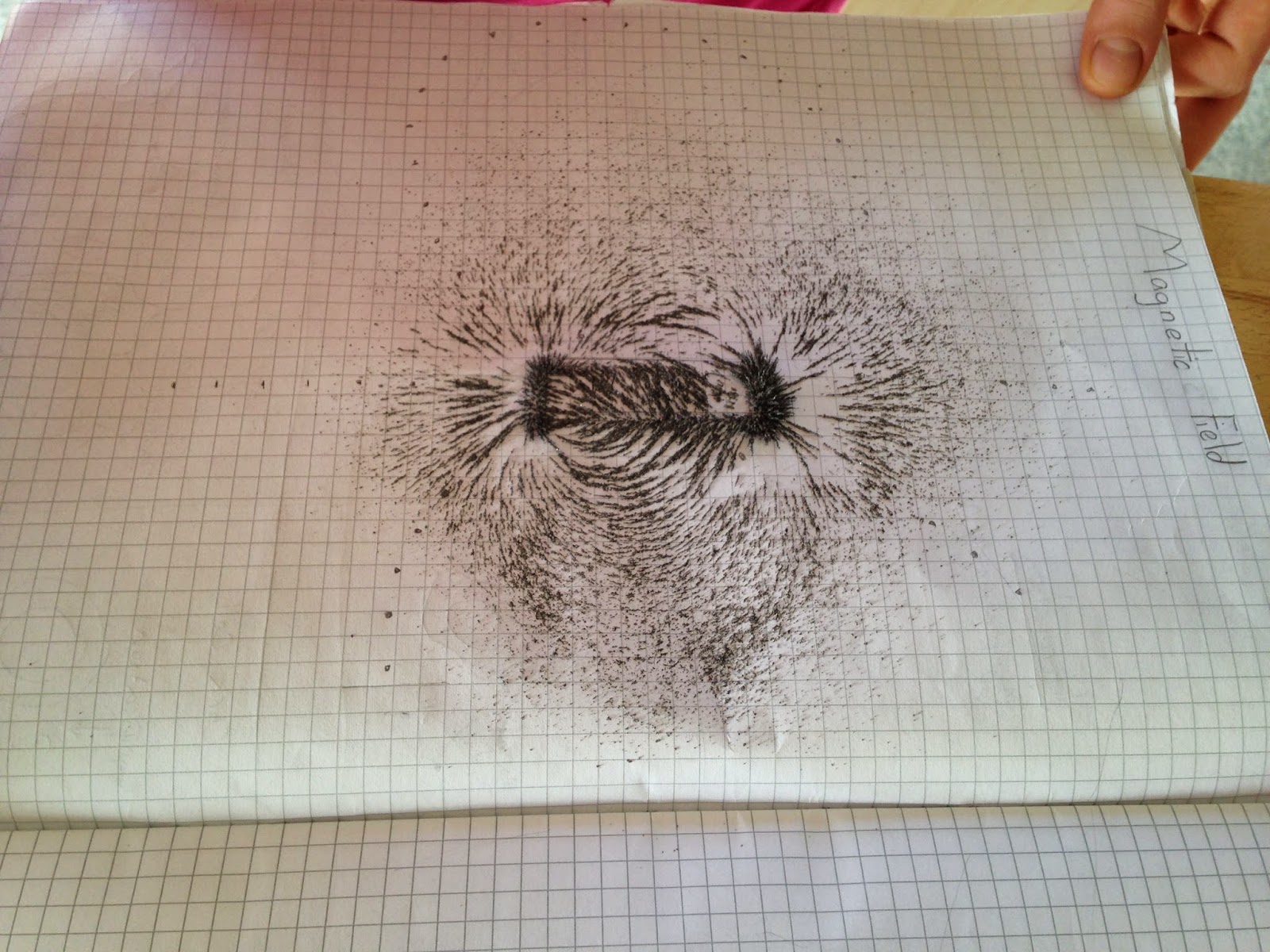
In grade 6, students explored magnets fields and learned about the magnetic field of the Earth. They used compasses and iron filings to see the magnetic field around a bar magnet. 

Today they made temporary magnets by  stroking a needle with a permanent magnet. They could pick up paper clips. They could also use the needle floating in water to see the Earth's magnetic influence. 
 These girls had a magnetized paper clip pointing to magnetic north. 


 Magnetic needles floating in water.  
We briefly discussed the connection between electricity and magnets. We were able to make a homemade compass move when put an electric current through a wire nearby. Next lesson we will investigate electromagnets. 


tisdag 3 mars 2015

Lever Fever

Grade 4 is exploring simple machines. This week we looked at how a first class lever can change both the size and direction of a force. 


 Besides commenting on the fact that our levers were hard to balance, they did find out that they could balance the lever if the sum or products of the masses were the same. Above you can see 7 balances with 3+4 and below you can see that 3x7 balances 7x3. 
 We just started testing moving the fulcrum to lift heavier masses. We talked about Archimedes who lived over 2000 years ago and said, "Give me a lever and a place to stand and I shall move the Earth."
http://quoteimg.com/archimedes-lever/
Students should be looking around for levers in their homes this week. 


MRS Gren, cells and development

Grade 6 has been studying life and cells since we came back in January. They made some booklets about the characteristics of living things that we will share with grade 1 students. They also made posters about different body systems. You are welcome to come see them on the 3rd floor. Here they are working together to put some review cards in a sequence. They (6v) will write a test on these topics on Monday March 9. They have a review sheet on Managebac.